A short film made in Kiju · APITHINGS
Full Compliance
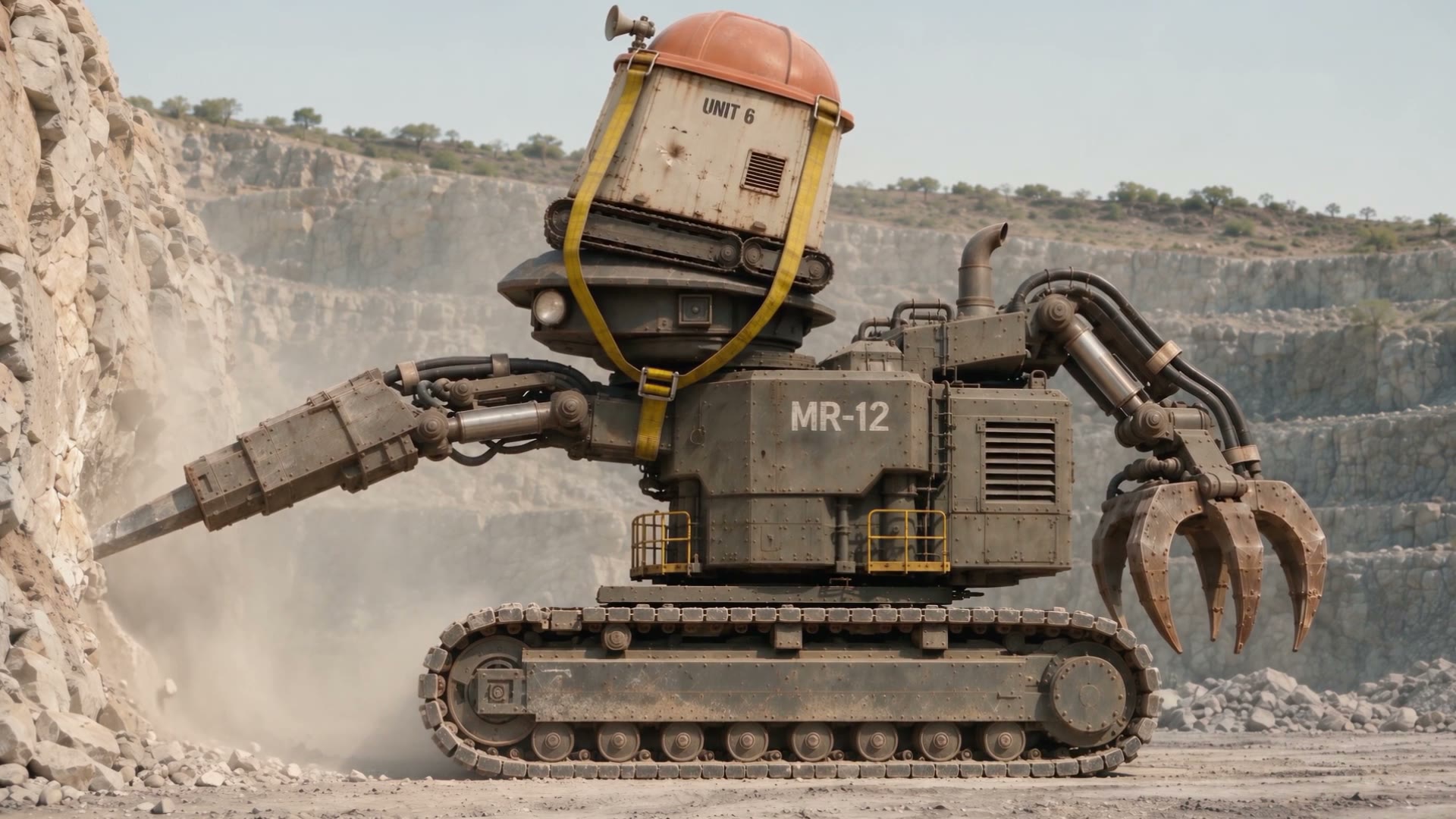
The quarry has one rule: hard hats. Morrow, a demolition giant, has no hat that fits and no intention of stopping. Voss, the inspector, has a clipboard and a cabin on tracks.
The images, video, voices and music are AI-generated. No real person, no cloned voice.
Transcript
Hat.
Largest size.
Still compulsory.
Pull over.
Compliant.
Requesting a ladder.
The film’s lines are in English, burned into the picture. The French page adds French subtitles at the top.
How it was made
A minute of film cost $100.90 in metered AI calls, and the fifteen clips on screen $46.60 of it. The rest bought what we did not know yet: a test at 480p that fixed the story before a 1080p take was paid for, the retakes the cut asked for, a scene filmed in one generation that did not hold, and a judge for every cut.
Who made it
A Kiju original, written for and owned by APITHINGS, the studio that builds Kiju. It was made from 6 to 9 November 2026 on the studio’s own provider accounts, in the desk that became Kiju 0.11. Its images, video, voices and music are AI-generated. The story came out of a blind pitch round between three models, Claude, GPT-6.1 Sol and Grok, and each step went to the founder before the next one started.
The brief: action, and no lips to sync
We wanted a minute that moves like a trailer, so we chose what video models fake well: vehicles, dust, debris and a tracking camera. A mouth a few frames off is where an AI film gives itself away. So the film has two machines and an inspector with no mouth to sync, one quarry, and every hard moment split across a cut. Eighteen pitches were scored blind by three models; Full Compliance came first for all three.
Made in five steps
- Write and draw outside Kiju. Three drafts of the shot list, judged side by side. The characters and the key frames drawn with the image model in Codex, then re-photographed on Nano Banana 2.1 to lose the drawings’ crackle. Model viewers who knew nothing of the story retold it from the board.
- Test the motion at 480p. Twenty-eight Seedance 2.5 takes and four rough cuts, outside the desk. The hat only read as a hat once it moved, and the jump only landed once it had a last frame.
- Bring it into Kiju. « Paste a script instead », and Kiju planned the film. Our frames went onto the shots with « Use your own picture… », the frame was set to Full 16:9, and Voss’s six lines were read on Eleven v4.
- Film it. Thirteen shots on Seedance 2.5 at 1080p with their own sound: shot 2 first, as Kiju suggests, then the other twelve at once, the jump between its first and its last frame. Two more shots came later, when the cut asked for them.
- Cut and export in Kiju. Shot 9 trimmed, the jump played at 3× (it still floats a little), the standoff’s own sound turned down, a march composed on Lyria and placed by each scene’s note, the lines burned in, exported at 1080p with Kiju’s « Made with AI » card. One thing we did by hand: splitting the standoff so the march comes back at the lift, in the plan’s file. Kiju 0.11 has that control now, « Start a new scene here ».
The bill
| Step | Spent |
|---|---|
| Pitch, story, design and board drawings, outside Kiju | $0.00 |
| Key frames re-photographed on Nano Banana 2.1, 53 calls | $3.02 |
| Motion test outside Kiju: 28 takes at 480p, no sound | $13.15 |
| In Kiju | $72.06 |
| Kiju’s writing, the reads, two re-voices and the music | $0.33 |
| 23 clips at 1080p with sound, Seedance 2.5 | $71.73 |
| The standoff in one generation, left out | $9.76 |
| Gemini 4 Argon watching the cuts | $2.91 |
| Total | $100.90 |
The 15 clips on screen cost $46.60.
Metered AI calls only, from the studio’s paid-call ledger and the show’s own records in Kiju, rounded to the cent. The model subscriptions that covered the writing and drawing outside Kiju are not in it, nor are the tutorials.
A four-second take cost $0.41 at 480p and $3.07 at 1080p with sound. The rough cuts found the story’s problems at the cheaper price, and none of their footage is in the film.
Three things that failed
The standoff in one generation. Seedance 2.5 can film several shots in one take. We gave it the standoff’s four shots, six reference pictures and one prompt, and paid $9.76 for sixteen seconds in one light and one sound. Watched at one frame a second, it looked like the lift every viewing had asked for. Asked for faults at eight frames a second, the judge found the claws turning into flat plates, the cabin spinning 90° in half a second and the strap buckling itself. It stayed out. The film keeps the four shots filmed one by one, and Kiju’s « This shot’s own sound » turns their squeals down.
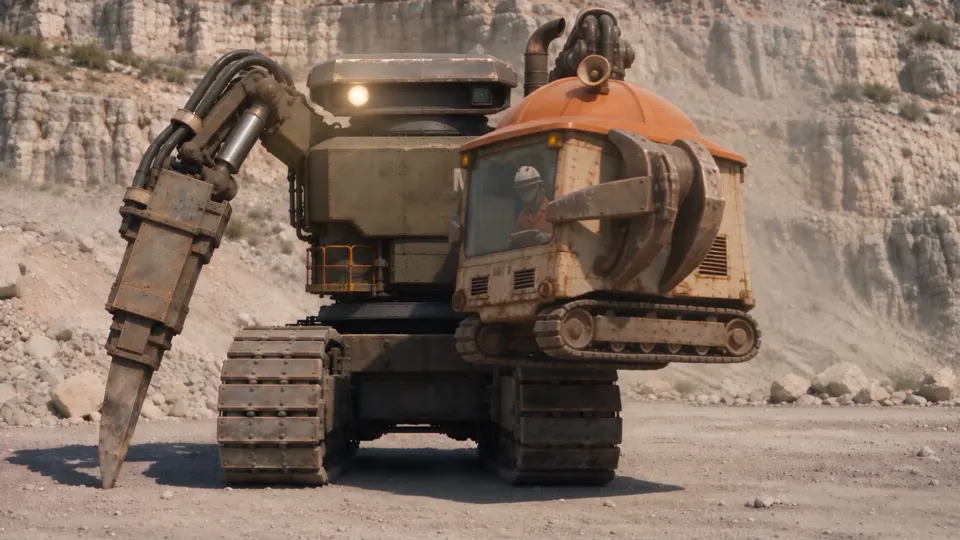
The claw at the end of shot 9. For half a second at the end of shot 9, Morrow’s breaker opens into a claw and his lamp lights a shot early. No viewing named it until the judge was asked for faults on the reference film. The fix cost nothing: in Kiju’s Cut, the shot now ends at 3.92 s of its clip, before both.
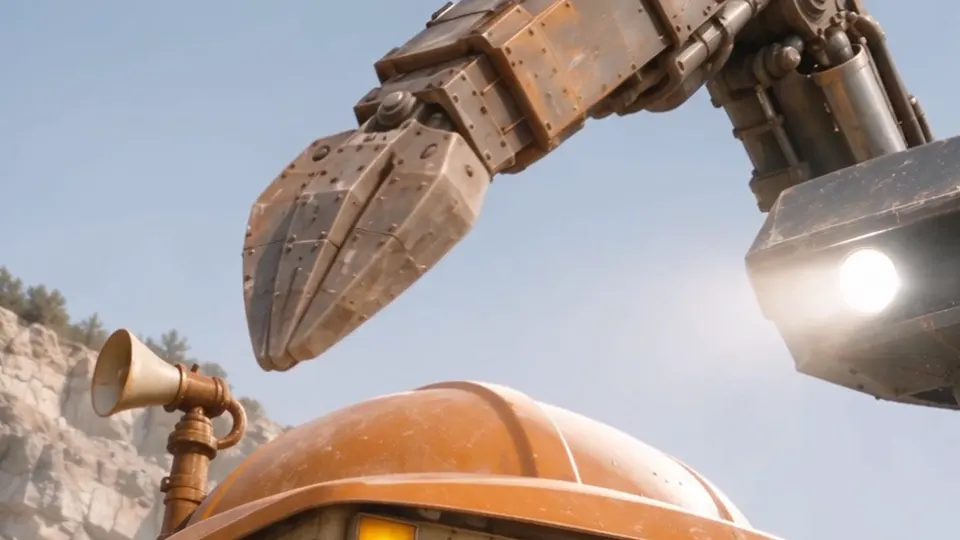
« Hat. », said twice. Voss’s first line is one word. Eleven v4 said it twice in every read whose direction said « official ». Directed « flat, amplified », it said it once. Seven reads with « Read again » on Kiju’s Board, $0.0165 in all, found the direction that works.
What we would tell anyone making one:
- Ask the viewing model for faults with their times, not for a score. Send it the frames, then check each claim on them.
- Test the motion at 480p before you pay for 1080p.
- A fault at the edge of a shot is often a trim away.
Make one of your own
Five tutorials follow this film on the desk, from the pasted script to the export: they are on the tutorials page. They replay the film’s real results, with each clip priced as OpenRouter lists Seedance 2.5; the bill above is the film’s own, filmed through Runware. Kiju is on the download page: your first episode is free in Kiju, then €29 a month, VAT included, the first 14 days free. The AI is paid to OpenRouter, on your own account, from your first script.
Credits
APITHINGS. Pitched by GPT-6.1 Sol and chosen blind; written with Claude, GPT-6.1 Sol and Grok on the founder’s brief. Frames drawn with Codex’s image model and re-photographed on Nano Banana 2.1. Motion: Seedance 2.5, through Runware. Voice: Eleven v4. Music: Lyria 3 Pro. Kiju’s writing: Claude Opus 5.5. Watched by Gemini 4 Argon. No real person, no cloned voice.
The figures come from the studio’s paid-call ledger and the show’s own records in Kiju. The film plays from the studio’s own storage account, as the tutorials do, with no outside player.
The five tutorials that follow it →What other films cost, take by take →