A Kiju original · APITHINGS · made in Kiju
Every Nine Seconds — made in Kiju
An old lighthouse guesses wrong in the dark. Two episodes made by APITHINGS in Kiju, with the production bill, the failed takes and the fixes.
A Kiju original, written for and owned by APITHINGS. This show was made in the Kiju development desk on APITHINGS’s own provider accounts. Its images, video and voices are AI-generated. It was written with three AI models — Claude, GPT-6.1 Sol and Grok — on the founder’s brief, and the founder approves what is published. The edit and sound assembly were made outside the desk, then brought back for review and approval.
Tin Kaiju’s other experiments on this site were made with the studio’s engine. Their credits belong to those experiments; “made in Kiju” belongs to this show.
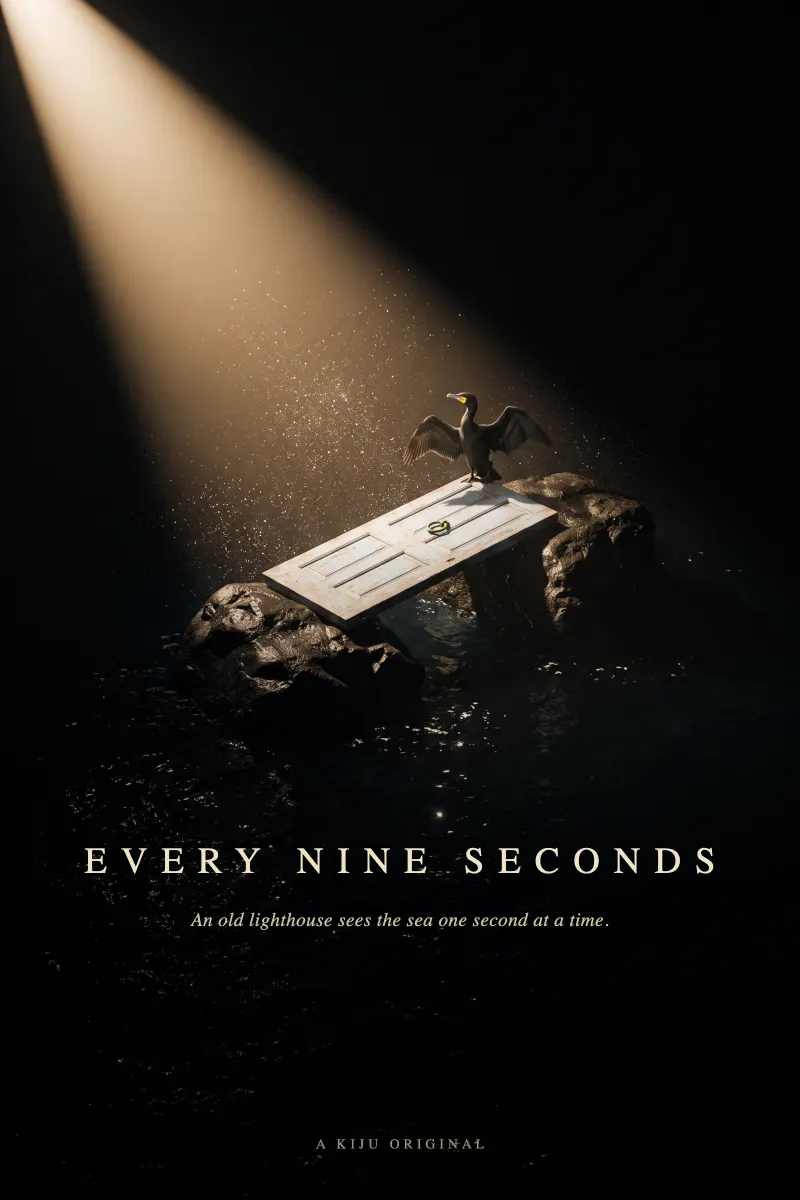
Six sweeps, one wrong guess after another
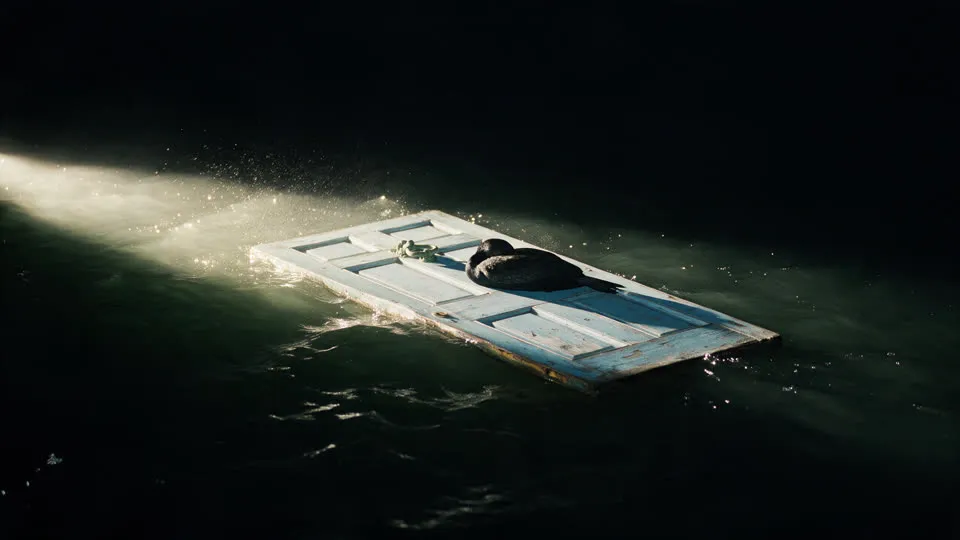
No ship needs the old automated lighthouse any more. It still turns every nine seconds, and invents what it has seen in the dark. One night it finds a door adrift with a cormorant asleep on it. The lighthouse sees a boat, a man, a drowning. We see a bird.
Each episode has six sweeps of the beam. The lighthouse speaks only in the dark; the last sweep is silent. The Door and The Fog are made. Four more episodes are sketched. The finished format is six continuous nine-second shots and a title card: 57.5 seconds, in English and French, widescreen and vertical.
Made in five steps
- Write the direction and the cast. Approve the bible and the six-sweep script. Compare reference sheets on Nano Banana Pro and GPT Image 2.5; keep GPT Image’s door and bird. A Seedream look frame becomes the bible’s visual reference.
- Make the keyframe. Seedream 5.0 Pro reads the sheets and the look frame. When continuity matters more than invention, edit the previous sweep’s frame on Nano Banana Pro instead.
- Make the dark end frame, then the motion. Edit the keyframe with the beam gone. Animate between the two frames on Kling 3.0 Pro or Seedance 2.5, choosing per sweep after comparing takes. A first frame alone made a light fade in place.
- Record the voice and assemble outside the desk. Make each line as a voice take in Kiju, with voices designed for the show, never cloned. The external edit places each line in its shot’s measured dark, with the tick, the sea, the two-note call and the title. English and French have their own words.
- Bring the cut back to Kiju. Import each version, pin notes to its seconds, check the fixes and resolve them, approve the final cut and prepare the publication with captions. The folder keeps the decisions and the takes that did not work.
The bill
| Scope | Spent | Takes |
|---|---|---|
| Development: look, cast sheets, tests | $0.81 | 9 |
| Episode 1 — The Door | $39.30 | 57 |
| Episode 2 — The Fog | $30.53 | 46 |
| Total | $70.64 | 112 |
The twelve kept video takes: 105 seconds for $17.11. The rest paid for tests, comparisons and retakes.
Published production account, rounded as recorded; the sample is a selection of that work. apps/kiju/originals/every-nine-seconds/PRODUCTION.md
These are generation costs in the desk, as published in the production account. They include the tests and set-aside takes, not just the images that survived. Reviews, voice design, effects and music outside the desk are separate. This is the bill for finding the format, not a price promised for your next episode. The shipped sample contains a selection of the production’s records and small media proxies; adding its selected takes will not reproduce the full production bill.
Three things that failed
The sea froze. “Slow motion, locked camera” and a sixfold slowdown made it read as a still under a light mask. The fix was real-time motion, a moving swell and foam, and continuous nine-second sweeps whose dark is still the shot.
The door turned between sweeps. Separately generated keyframes drifted. Episode 2’s empty-door and water-ring sweeps were rebuilt from sweep 1’s own frame: the same photograph, with the bird gone. The door and its rocks stayed put.
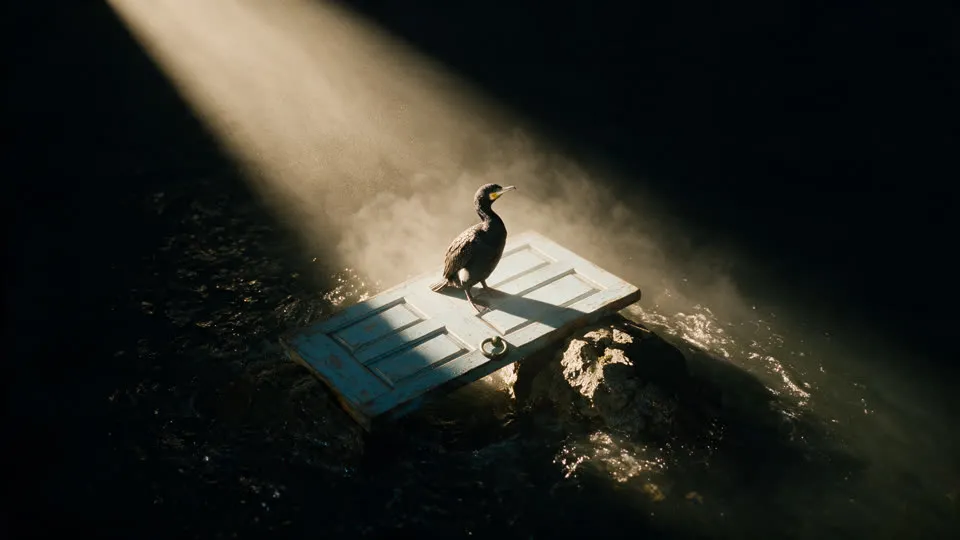
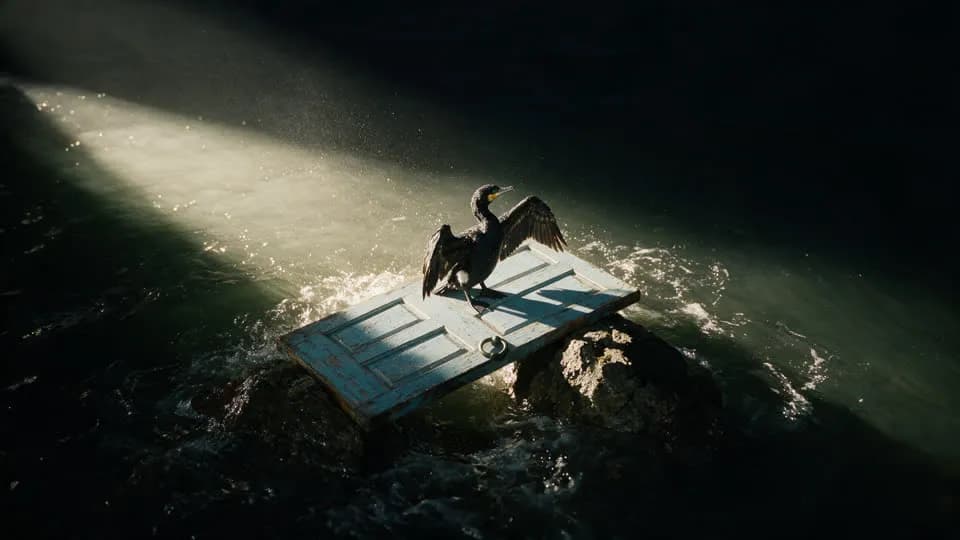
The fish dissolved into the bird. Both models struggled when the bird moved. The fix was to hold the bird still and let only drops and fog move. Set-aside takes retain their reasons. A keeper is a choice for one shot, not a verdict that a model always wins.
Open it in the desk: the sample channel
On Kiju’s Welcome page, press Open the sample channel. Every Nine Seconds opens read-only: the bible, the cormorant and door sheets, the scripts, chosen and set-aside takes, cut versions and pinned notes. Make a copy to work in gives you a channel to practise on, without paying again for the imported takes. Earlier cut versions remain English history proxies, including in the French sample; the final cuts and written notes are localized.
Start with Open a channel, then follow the eight guides. The desk is in private beta; the download page says what is available now.
Credits and source
APITHINGS. Written with Claude, GPT-6.1 Sol and Grok, on the founder’s brief. Images: Seedream 5.0 Pro, Nano Banana Pro and GPT Image 2.5. Motion: Kling 3.0 Pro and Seedance 2.5. Voices designed with ElevenLabs. Title type: Literata, SIL Open Font License. No real person or cloned voice.
Source: apps/kiju/originals/every-nine-seconds/PRODUCTION.md, the show’s bible and scripts, and the shipped sample records. The poster comes from APITHINGS’s marketing kit; the three keyframes come from the sample’s recorded media. All are served by this site, with no video file or third-party embed.